
Real estate trends can sometimes feel like watching a masterpiece slowly come to life. But what’s brewing now is reshaping tomorrow as we know it.
For homebuyers, investors, or UHNIs, understanding these shifts is like holding a crystal ball for your financial future. The focus is moving beyond traditional properties to sustainable and tech-enabled spaces that align with evolving environmental, social, and governance (ESG) goals, signalling the promising future of Indian real estate.
Beyond the domain of ultra-luxury, over the next ten years, sustainability, technology, and urbanisation will redefine every corner of the market.
But why do these trends matter, especially for first-time or mid-segment buyers?
Because they shape affordability, choice, and long-term value. Sustainable homes may cost more upfront but save big on bills, making it good for the planet and your pocket.
At the same time, PropTech is making homebuying smoother with virtual tours, online paperwork, and smart features that are no longer a luxury but the new normal.
Current State of Indian Real Estate
2024 was a blockbuster year for Indian real estate, with record-breaking sales, especially in the luxury segment as both investors and first-time buyers made their move.
And the numbers don't lie! We saw over 229,900 residential units sold across India's top seven cities by September 2024. That's a whopping 17% jump compared to the same period in 2023.
But here's the fun part: the real talk of the show are the luxury and ultra-luxury segments where buyers are gravitating towards larger homes with high-end amenities. This surge is boosting luxury real estate investment in India, especially in Mumbai.
- Mumbai’s Luxury Hot Zones
Worli, Malabar Hill, Pali Hill, Cuffe Parade, Bandra, Juhu, and Powai.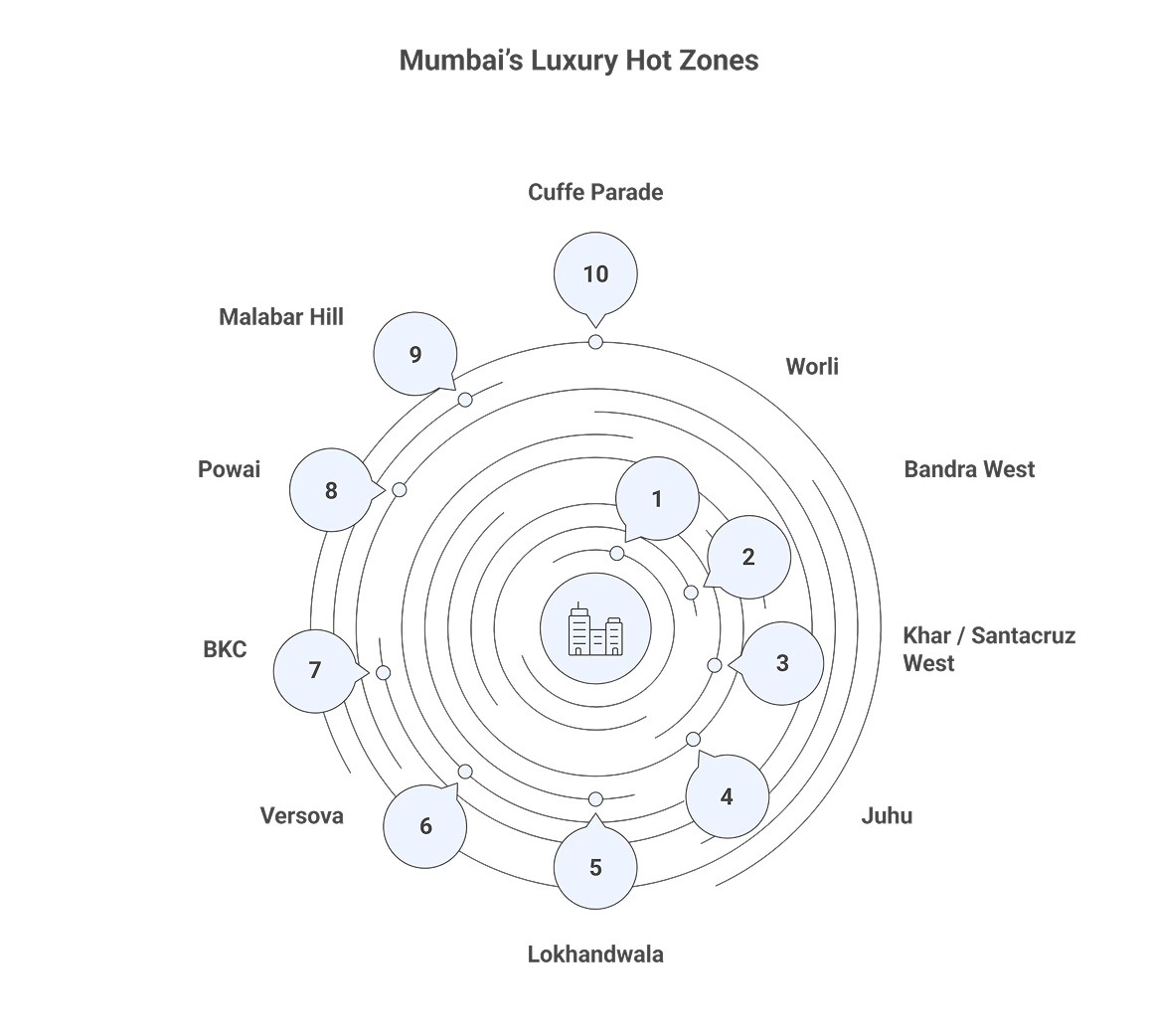
- Resale Trends
While new launches contribute significantly, Mumbai's resale market also reflects a shift towards larger, more luxurious spaces. Peripheral, central, and western suburbs like Bhandup West, Mulund West, Borivali West, and Malad East are seeing increased residential activity too. This growth is supported by improved connectivity and the rising demand for spacious homes.
Emerging Trends
The Indian real estate sector is undergoing a significant metamorphosis.
- Sustainability has transitioned from a niche concept to an absolute necessity. Buyers, influenced by environmental concerns, are actively seeking out green buildings that ensure eco-conscious design, energy efficiency and advanced water management.
This supports the demand for sustainable housing in India: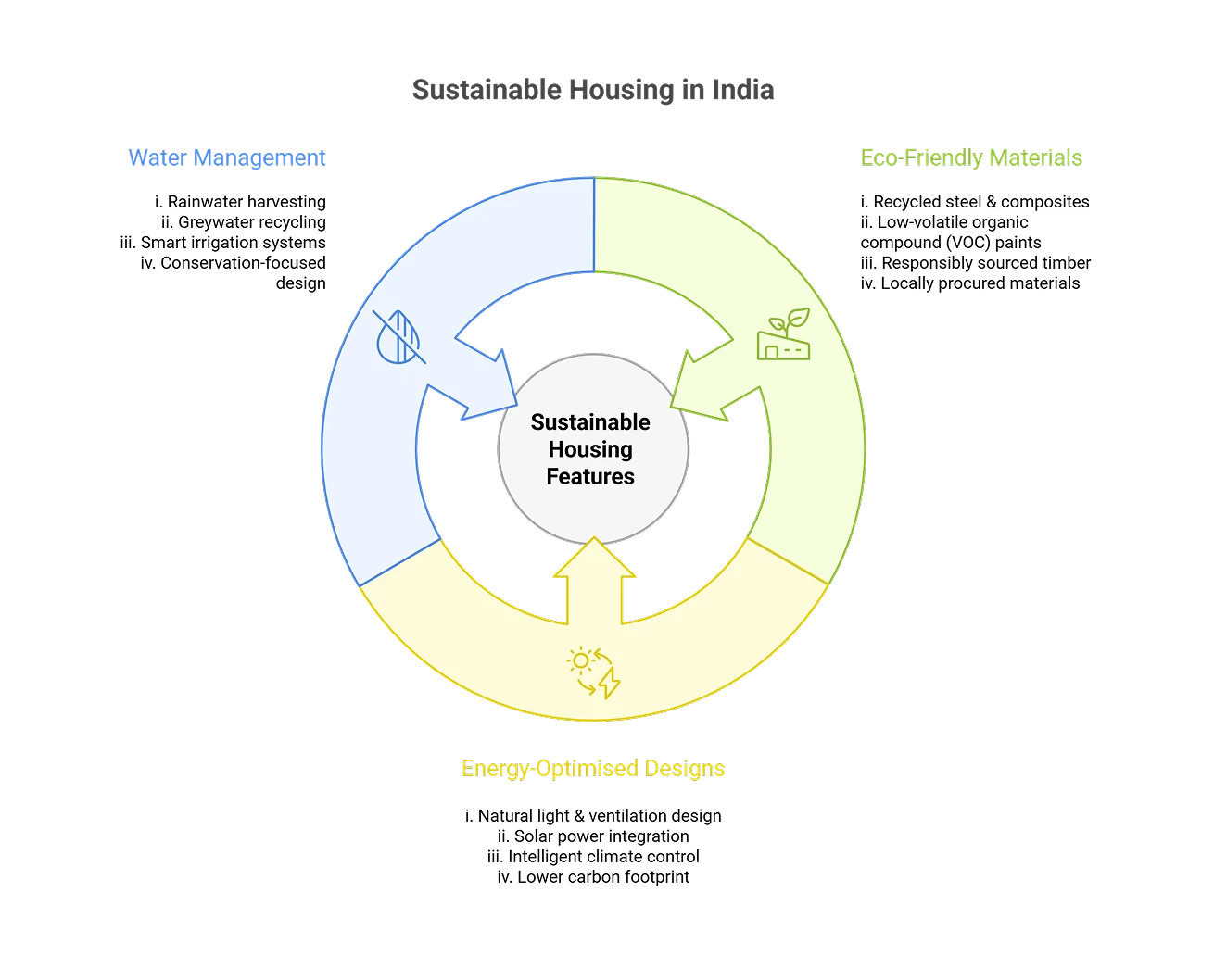
- Technology is no longer an extension to real estate; it is now an integral part of the modern property experience. PropTech trends in real estate is revolutionising every phase, right from property discovery to post-acquisition:
- Smart Homes: Beyond basic automation you can control lighting, temperature, entertainment, and security effortlessly by just using your voice or advanced AI to give command.
- Virtual Reality (VR) Tours: Now physical visits are giving way to immersive 360° tours, letting buyers explore properties worldwide, save time, and make informed decisions.
- AI-Driven Tools: AI is reshaping real estate with instant answers, personalised recommendations, and in luxury, advanced security through biometrics and predictive monitoring.
3. Urbanisation in India is evolving beyond just city centres. As metros expand and lifestyles shift, we're seeing growth at both the core and the edges of our urban hubs.
- Sustained Growth in Tier-I Cities: Major metropolitan centres such as Mumbai, Delhi-NCR, and Bengaluru continue to attract significant talent and capital that sustains demand, vertical expansion and planned urban communities.
- Suburban Rejuvenation: The hybrid work models of today are making individuals re-evaluate their daily commute. This shift is fueling demand for larger homes and better quality of life in well-connected suburbs, supported by rising infrastructure investment.
Demographics Creating Demand
The shifting demographic landscape is also carefully shaping the housing demand:

Planned Infrastructure Projects
By 2026, India’s infrastructure landscape is set for a major leap. Upcoming metro and rail expansions will further cut travel time and boost property values, while the Smart Cities Mission continues to transform over 100 cities into tech-driven, sustainable ecosystems. Plus new airports, marinas, and water taxis will enhance connectivity. Simultaneously, it is projected that data center growth will demand nearly 10 million sq. ft. of real estate and USD 5.7 billion in investments by 2026, powering the next phase of smart homes and PropTech trends in real estate.
Housing Development Projects
India’s housing development presents a compelling duality. Affordable housing, backed by schemes like Pradhan Mantri Awas Yojana (PMAY), addresses essential needs with smart design and community focus, while luxury developments in prime areas redefine urban living with world-class amenities and exclusivity. Together, these segments are driving growth, with the market projected to reach USD 1 trillion by 2030, creating great opportunities for both homebuyers and investors.
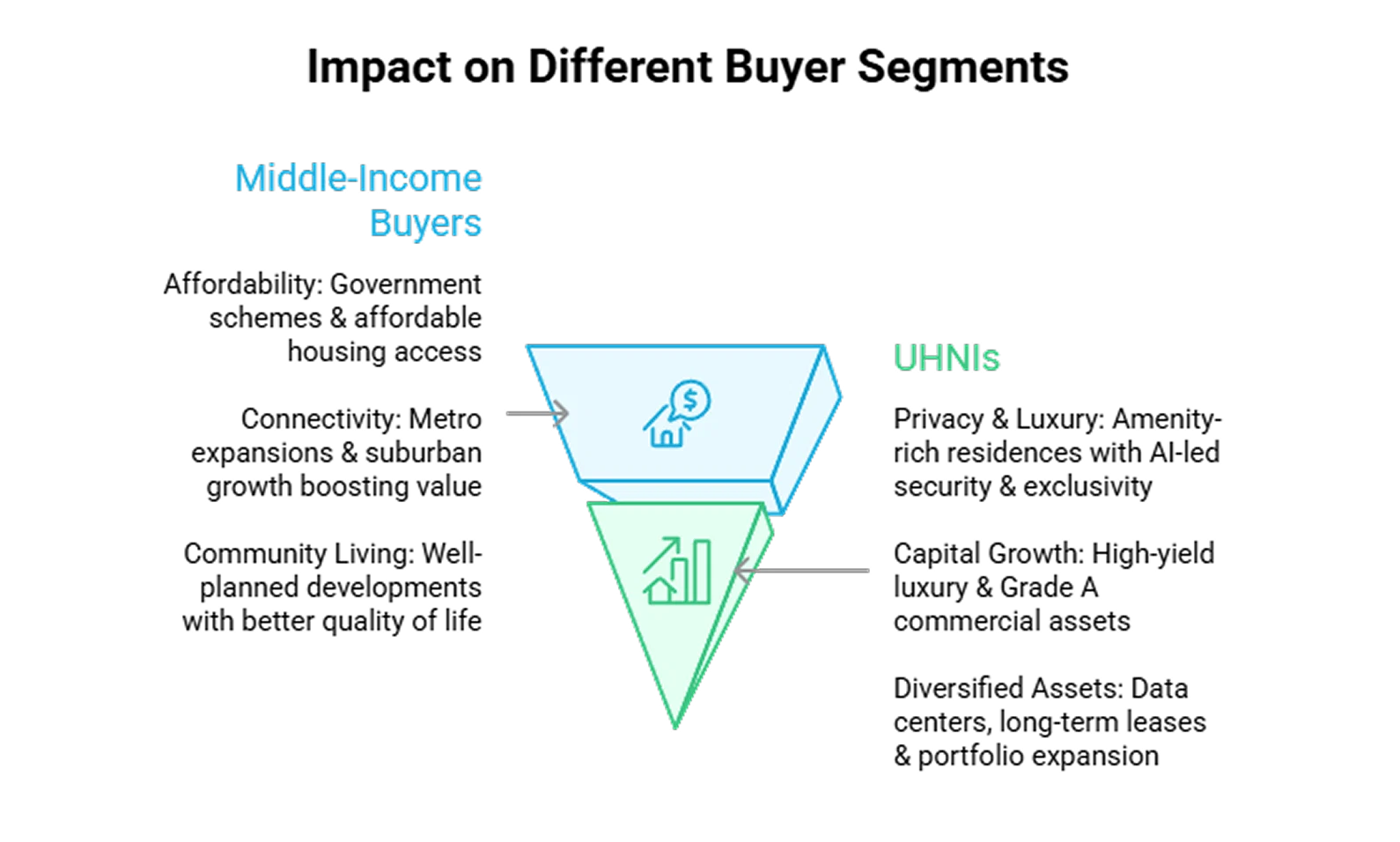
Impact on Different Buyer Segments
The evolving real estate landscape presents opportunities for various buyer segments, driven by market dynamics and a subtle, yet crucial, emphasis on privacy in market segmentation.
Conclusion
India's real estate market is soaring, driven by sustainability, tech innovation, and urban evolution.
For Ultra-High-Net-Worth Individuals (UHNIs) it’s the right time to invest in luxury homes, high-yield commercial assets, and the booming data center sector.
From first-time buyers to mid-segment investors, everyone reaps benefits, whether through affordable options, improved connectivity, or long-term value creation.
The future of Indian real estate is here: smart, sustainable, and connected living. Are you ready to invest?

